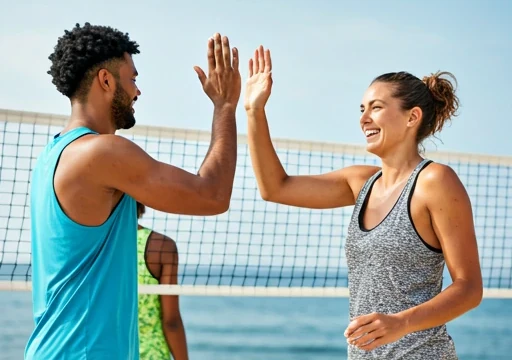
Racket, stance, underhand serve, and the most common mistakes during your first weeks. Everything you need to know before stepping onto the sand.
Beach tennis has evolved from a niche sport into one of the fastest-growing racket sports in the world. Whether on beaches, sports clubs, or urban sand arenas, more and more people are discovering the excitement of this unique game.
The combination of physical activity, social interaction, quick learning, and fun matches makes beach tennis an excellent sport for players of all ages and skill levels. However, beginners often have many questions: Which racket should I buy? How does the serve work? Do I need tennis experience? How can I avoid common beginner mistakes?
If you're thinking about starting your beach tennis journey, this guide was made for you.
What Is Beach Tennis and Why Is It So Popular?
Beach tennis originated in Italy during the 1980s and combines elements of traditional tennis, beach volleyball, and badminton.
The defining characteristic of the sport is that the ball is not allowed to bounce on the sand during a rally. This creates fast-paced, exciting exchanges that are enjoyable even for beginners.
Another reason for its popularity is the relatively short learning curve. After only a few lessons, most players can already sustain rallies and participate in recreational matches.
Some of the main benefits of beach tennis include:
- Improved cardiovascular fitness
- Enhanced coordination and balance
- Increased muscular endurance
- Full-body workout
- Social interaction and community building
- Reduced joint impact thanks to the sand surface
Do I Need Tennis Experience?
No.
This is one of the most common concerns among new players.
While some skills transfer from tennis, many beach tennis players begin with no previous racket sport experience at all.
People coming from volleyball, soccer, running, or fitness training often adapt quickly to the game.
Those with a tennis background may have an advantage in ball control and tactical understanding, but they may also need to adjust habits that do not work as well in beach tennis.
The key is understanding that beach tennis is its own sport, with its own techniques and strategies.
Essential Equipment for Beginners
One of the best things about beach tennis is that getting started does not require a huge investment.
Choosing the Right Racket
Your racket is the most important piece of equipment.
For beginners, look for:
- Weight between 320 g and 340 g
- Softer hitting surface
- Greater control than power
- Medium thickness
A common mistake is purchasing an advanced professional racket immediately. While it may seem like a good idea, it often makes learning more difficult.
A forgiving racket designed for comfort and control will help you develop proper technique faster.
Beach Tennis Balls
Beach tennis balls have lower pressure than traditional tennis balls.
This allows for longer rallies, greater control, and a more beginner-friendly playing experience.
Clothing and Accessories
For maximum comfort, consider using:
- Lightweight sportswear
- Sunglasses designed for sports
- A cap or visor
- Sunscreen
- A water bottle
Hydration is especially important when playing in warm weather.
How to Hold the Racket Correctly
Before learning advanced techniques, it's important to understand the proper grip.
Most beginners start with a neutral grip, which allows them to play both forehand and backhand shots comfortably.
One common mistake is gripping the racket too tightly.
When this happens:
- Arm tension increases
- Movement becomes less fluid
- Ball control decreases
- Injury risk increases
Think of your grip as firm but relaxed.
The Basic Ready Position
Many beginner mistakes are not related to stroke technique but to positioning.
A proper ready position includes:
- Slightly bent knees
- Upper body leaning forward
- Weight on the balls of your feet
- Racket held in front of the body
This stance allows you to react more quickly to incoming shots.
Many beginners stand upright or remain flat-footed, making movement on the sand much harder.
Understanding the Underhand Serve
The serve puts the ball into play and is one of the first rules every beginner needs to master.
Unlike what many people think, in beach tennis the serve can generally be executed overhand (similar to traditional tennis) or underhand — there is no requirement to use a specific style. The rules allow the server to release the ball by hand in any direction and hit it with the racket before it touches the sand.
The only exception is in mixed doubles, where the male player must serve underhand, below shoulder level. For recreational play and beginners in general, you are free to choose the style that feels most comfortable — and the underhand serve is usually the best option at first, as it offers more control and consistency.
Important serving rules every beginner should know:
- The server must keep both feet behind the baseline before starting the motion;
- Stepping on the baseline or into the court during the entire serving motion is not allowed (this is called a foot fault) — the area behind the line is considered part of the court;
- Small foot adjustments are allowed, but walking or running during the serve is not permitted;
- The ball must be hit in the air, without bouncing on the sand before contact;
- The serve must clear the net and land in the opponent’s court;
- There is no second serve: if you miss the serve, it is a fault and you lose the point;
- If the serve touches the net and still goes over, the ball remains in play (“no net” rule) — unlike traditional tennis.
The basic underhand serve is simple:
- Position yourself with both feet behind the baseline;
- Release the ball in front of your body;
- Strike the ball with an underhand motion while it is still in the air;
- Aim it toward the opponent’s service court.
At first, power should not be your main goal.
Since there is no second serve, many beginners who try to serve too hard end up losing points through consecutive errors.
During your first few weeks, prioritize:
- Consistency
- Control
- Placement
- Reliability
The Main Beach Tennis Shots
Forehand
The forehand is usually the first shot beginners learn.
The movement should feel natural, using body rotation and weight transfer.
Avoid hitting solely with your arm.
Backhand
The backhand can be played with one or two hands depending on personal preference.
Many recreational players choose to move around the ball and hit forehands whenever possible.
Volley
Since the ball never bounces, most shots are played in the air.
Good volleys require:
- Anticipation
- Control
- Proper positioning
Smash
The smash is the most recognizable attacking shot in beach tennis.
It involves striking the ball overhead to finish the point.
Although exciting, beginners should focus first on consistency before attempting powerful smashes.
The 7 Most Common Beginner Mistakes
1. Trying to Hit Every Ball Hard
Power without control leads to errors.
Consistent players often win more matches than powerful players.
2. Standing Still After Hitting
The rally continues after your shot.
Constant movement is essential.
3. Using Only Your Arm
Your entire body should contribute to the shot.
Relying only on the arm reduces power and increases fatigue.
4. Ignoring Positioning
Being in the right place is often more important than having a strong shot.
Good positioning solves many common problems.
5. Copying Professional Players Too Early
Professional techniques are the result of years of training.
Focus on mastering the fundamentals first.
6. Poor Communication With Your Partner
Most beach tennis matches are played in doubles format.
Good communication prevents confusion and improves teamwork.
7. Buying Advanced Equipment Too Soon
Expensive equipment does not replace proper technique.
Invest in lessons and practice before upgrading your gear.
How Long Does It Take to Learn Beach Tennis?
The answer depends on how often you play.
A general timeline looks like this:
- 1 to 4 weeks: Initial adaptation
- 1 to 3 months: Consistent recreational play
- 3 to 6 months: Intermediate development
- 6 to 12 months: Participation in amateur tournaments
One of the biggest advantages of beach tennis is that you can start having fun almost immediately.
You do not need months of training before enjoying the game.
Are Lessons Worth It?
Absolutely.
While self-learning is possible, professional coaching accelerates development significantly.
A coach can identify and correct technical mistakes before they become difficult habits to break.
Lessons also make learning safer, more efficient, and more enjoyable.
How to Improve Faster
If you want to progress more quickly, follow these recommendations:
- Play at least twice a week
- Take lessons regularly
- Record your matches for analysis
- Participate in friendly competitions
- Focus on fundamentals before power
- Watch experienced players
- Improve your fitness off the court
Consistency is the real secret to improvement.
Final Thoughts
Beach tennis is an accessible, social, and exciting sport that welcomes players of all ages and backgrounds. With the right equipment, proper technique, and a focus on fundamentals, you can develop quickly and enjoy all the benefits the sport has to offer.
If there is one piece of advice every beginner should hear, it is this: do not worry about playing perfectly during your first weeks. Focus on keeping the ball in play, learning the basics, and having fun.
Everything else will come naturally with practice, experience, and time on the court.
If you're looking for a fun, healthy, and easy-to-learn sport, beach tennis for beginners is one of the best choices you can make today.
Escreve sobre quadras, modalidades e a comunidade esportiva brasileira para o Quadras Online.